Thyroid hormones
The thyroid is a butterfly-shaped gland located at the front of your neck, just below the Adam's apple. Small as it is, it plays a crucial role in virtually every aspect of your health. The thyroid produces hormones that regulate your body's metabolism, influencing how your body uses energy, how fast your heart beats, and even how you feel. In this post, we take a closer look at what the thyroid does, the hormones it produces, and how it affects your health.
What is the thyroid?
The thyroid is part of the endocrine system, which consists of glands that release hormones into the bloodstream. These hormones send signals to different parts of the body to regulate various functions, including growth, metabolism, and temperature regulation.
The main hormones produced by the thyroid are:
- Thyroxine (T4): The primary hormone produced by the thyroid. Although T4 is relatively inactive on its own, it is converted into T3 in various tissues throughout the body.
- Triiodothyronine (T3): The active form of thyroid hormone. T3 regulates your body's metabolism and influences nearly every physiological process, including growth and development, body temperature, heart rate, and energy levels.
- Calcitonin: This hormone helps regulate calcium and phosphate levels in the blood, though it is less well known than T3 and T4.
How does the thyroid work?
Thyroid function is regulated by the pituitary gland, a small gland at the base of your brain. The pituitary produces thyroid-stimulating hormone (TSH), which prompts the thyroid to produce T3 and T4. When levels of these hormones in the blood are sufficient, the pituitary reduces TSH production — a feedback mechanism that helps keep hormone levels in balance.
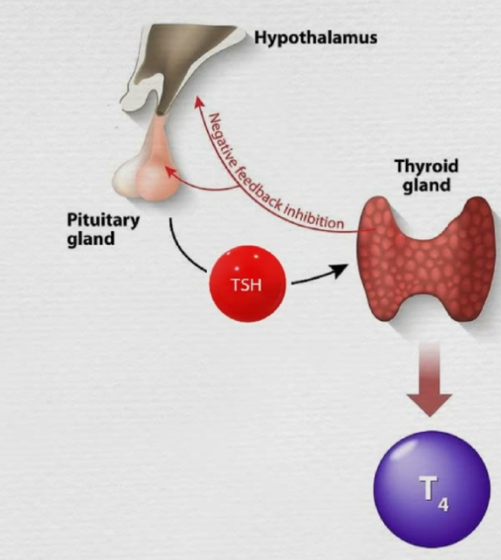
Functions of the thyroid
Thyroid hormones influence nearly every organ in the body. Here are some of the most important functions:
- Metabolism: T3 and T4 regulate the rate at which your body burns calories to produce energy. This affects your weight, energy levels, and body temperature.
- Heart function: Thyroid hormones influence heart rate and the strength of each heartbeat. Too much or too little hormone production can lead to irregular heart rhythms.
- Growth and development: Especially in children, thyroid hormones are essential for normal brain and skeletal development.
- Mental health: Disruptions in thyroid function can lead to mood swings, depression, or anxiety.
- Digestion: Thyroid hormones stimulate digestion, helping food to be broken down and absorbed more efficiently.
Thyroid disorders
When the thyroid doesn't function properly, it can lead to a range of health problems. The most common thyroid disorders are:
Hypothyroidism (underactive thyroid)
Hypothyroidism occurs when the thyroid produces insufficient hormones. This can cause symptoms such as fatigue, weight gain, depression, and a slow heart rate. In severe cases, untreated hypothyroidism can lead to myxoedema, a rare but life-threatening condition.
Causes of hypothyroidism:
- Autoimmune disease (Hashimoto's thyroiditis)
- Iodine deficiency
- Treatment with radioactive iodine or surgical removal of the thyroid
- Medications such as lithium
Subclinical hypothyroidism
Subclinical hypothyroidism is a mild form of hypothyroidism in which thyroid hormone levels are still within the normal range, but TSH is elevated. This means the thyroid is working harder to produce enough hormones.
Although symptoms are often mild or absent, they can still affect quality of life and, if left untreated, may progress to full hypothyroidism. Symptoms can be subtle and include fatigue, mild weight gain, low mood or mild depression, and reduced concentration. Treatment ranges from monitoring to low-dose thyroid hormone medication, depending on the severity and presence of symptoms.
Hyperthyroidism (overactive thyroid)
Hyperthyroidism occurs when the thyroid produces too many hormones. This can cause symptoms such as weight loss, a rapid heart rate, nervousness, and sweating. Left untreated, hyperthyroidism can lead to serious complications including cardiac arrhythmias and bone loss.
Causes of hyperthyroidism:
- Graves' disease (an autoimmune condition)
- Thyroid nodules producing excess hormones
- Inflammation of the thyroid (thyroiditis)
Lifestyle and thyroid health
A healthy lifestyle can help support good thyroid function. Here are some tips:
- Iodine intake: Iodine is essential for thyroid hormone production. Make sure you get enough iodine through your diet — for example by eating seafood, dairy products, and iodised salt.
- Selenium and zinc: These minerals support thyroid function. Selenium is found in nuts, fish, and eggs, while zinc is found in meat, nuts, and seeds.
- Limit excess soy: Some research suggests that excessive soy consumption can interfere with thyroid function, particularly if you already have a thyroid condition.
- Manage stress: Chronic stress can negatively affect thyroid function. Practices such as meditation, yoga, and adequate sleep can help manage stress.
- Regular check-ups: If you experience symptoms of thyroid problems, it's important to have your thyroid function checked regularly through blood testing.
Conclusion
The thyroid may be small, but its impact on your health is enormous. By taking good care of your thyroid and staying alert to any symptoms of thyroid disorders, you can contribute to your overall wellbeing. If you suspect your thyroid isn't working optimally, it's important to consult a doctor for a proper diagnosis and treatment. With the right care and attention, you can keep your thyroid functioning well and support your long-term health.
Read the methodology
Read next
Cortisol and insulin resistance
Cortisol is produced by the adrenal glands and is released in response to stress — whether that's physical stress, such…
Hunger hormones
Two hormones play a crucial role in regulating hunger and satiety: ghrelin and leptin. These hormones work together to…
Nutrition and the thyroid
Thyroid health is closely connected to what you eat. The right nutrients can support the production and function of…
Thyroid and stress
Cortisol, known as the "stress hormone," plays a crucial role in how our bodies respond to stress. It is a hormone…