Thyroid and stress
Cortisol, known as the "stress hormone," plays a crucial role in how our bodies respond to stress. It is a hormone produced by the adrenal glands and is involved in several vital functions, including regulating blood pressure, reducing inflammation, and managing the sleep-wake cycle. While cortisol is essential for survival, chronic stress and the resulting prolonged elevation of cortisol levels can have a negative effect on health — in particular on the functioning of the thyroid.
What is cortisol?
Cortisol is produced by the adrenal glands in response to stress. It is an integral part of the body's stress response system, also known as the hypothalamic-pituitary-adrenal (HPA) axis. Cortisol helps the body cope with stressful situations by:
- Raising blood sugar: It increases the amount of glucose available in the blood to serve as an energy source.
- Suppressing the immune system: Cortisol reduces inflammatory responses in the body — useful in the short term but problematic when it happens chronically.
- Promoting the breakdown of proteins and fats: This releases additional energy during times of stress.
The thyroid: regulator of metabolism
The thyroid produces the hormones thyroxine (T4) and triiodothyronine (T3), which are essential for regulating metabolism. These hormones affect nearly every cell in the body, from stimulating metabolic rate to regulating heart rate and body temperature.
The production and release of thyroid hormones is regulated by the hypothalamus and pituitary gland, which in turn receive signals about the levels of T3 and T4 in the blood. When thyroid hormone levels are low, the hypothalamus produces thyrotropin-releasing hormone (TRH), which stimulates the pituitary gland to release thyroid-stimulating hormone (TSH). TSH then prompts the thyroid to produce more T4 and T3.
How cortisol affects the thyroid
When cortisol levels are chronically elevated due to prolonged stress, this can negatively affect thyroid function in several ways:
- Reduced thyroid hormone production: High cortisol levels can suppress the release of TRH by the hypothalamus and TSH by the pituitary. This reduces the stimulation of the thyroid, resulting in less T4 and T3 being produced.
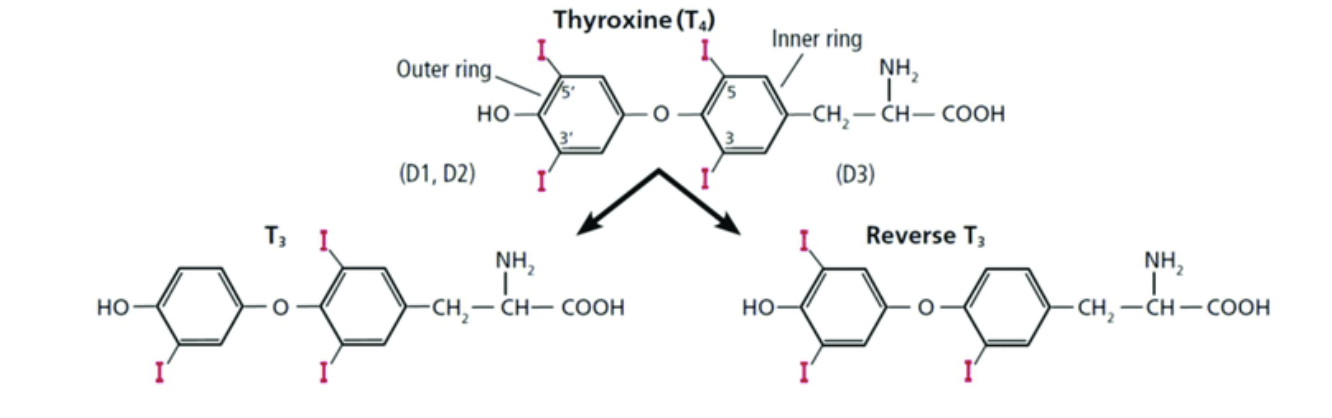
- Impaired conversion of T4 to T3: T4 is the inactive form of thyroid hormone, which is converted into the active form — T3 — in the liver and other tissues. Chronically elevated cortisol can interfere with this conversion, leaving less active T3 available to cells. This can produce symptoms of hypothyroidism even when T4 levels appear normal.
- Increased conversion to reverse T3 (rT3): Under the influence of cortisol, T4 can also be converted into reverse T3 (rT3), an inactive form of the hormone that occupies T3 receptors without producing the desired effects. This can worsen symptoms of an underactive thyroid.
- Suppression of thyroid receptors: Cortisol can also reduce cellular sensitivity to thyroid hormones by affecting thyroid hormone receptors. This means that even when sufficient T3 and T4 are present, cells cannot use them effectively — resulting in symptoms of hypothyroidism.
Consequences of cortisol-induced hypothyroidism
When thyroid function is compromised by chronic stress and elevated cortisol levels, this can lead to hypothyroidism. Common symptoms of cortisol-induced hypothyroidism include:
- Fatigue and low energy: A slowed metabolism can leave people feeling constantly tired.
- Weight gain: Reduced metabolism can lead to weight gain even when diet and physical activity remain unchanged.
- Cold intolerance: People may feel cold frequently, even in warm environments.
- Mental sluggishness and memory problems: Difficulty concentrating and memory issues are common in people with reduced thyroid function.
- Muscle weakness and joint pain: Reduced T3 production can cause muscles and joints to feel painful and stiff.
How to manage cortisol and thyroid health
Managing stress and regulating cortisol levels is essential for supporting healthy thyroid function. Here are some ways to do this:
- Stress management: Techniques such as meditation, yoga, breathing exercises, and mindfulness can help reduce stress and keep cortisol levels in check.
- Healthy nutrition: A diet rich in thyroid-supporting nutrients such as iodine, selenium, and zinc can help keep the thyroid healthy. Avoiding excessive sugar and processed foods can also help stabilise cortisol levels.
- Regular exercise: Moderate physical activity helps reduce stress and supports a healthy metabolism.
- Adequate sleep: Sufficient sleep is crucial for regulating both cortisol and thyroid hormones. Aim for 7–9 hours per night.
- Medical treatment: If hypothyroidism has already been diagnosed, a doctor may prescribe thyroid medication to normalise hormone levels. It is also important to work with a doctor to address any cortisol-related issues.
Conclusion
Cortisol plays an essential role in the body's response to stress, but chronically elevated levels can negatively affect thyroid function — potentially causing symptoms of hypothyroidism even when the thyroid itself is not directly damaged. It's important to be mindful of stress and make healthy lifestyle choices to support both your thyroid and your overall wellbeing. By keeping stress levels in check and monitoring thyroid health, you can minimise the negative impact of cortisol and keep your body in balance.
Read the methodology
Read next
Thyroid hormones
The thyroid is a butterfly-shaped gland located at the front of your neck, just below the Adam's apple. Small as it is,…
Cortisol and insulin resistance
Cortisol is produced by the adrenal glands and is released in response to stress — whether that's physical stress, such…
Hunger hormones
Two hormones play a crucial role in regulating hunger and satiety: ghrelin and leptin. These hormones work together to…
Nutrition and the thyroid
Thyroid health is closely connected to what you eat. The right nutrients can support the production and function of…