Behavior change action plan
Changing your behaviour and building new habits can be challenging, but with a structured step-by-step plan it becomes an achievable goal. By starting small, becoming aware of your current habits, and pursuing consistency, you can make lasting changes in your life. Below you'll find a comprehensive plan to help you reshape your habits and change your behaviour.
Awareness of unhealthy habits
Before you can start changing your behaviour, it's important to become aware of your unhealthy habits. This means looking at yourself honestly and acknowledging which habits you want to change. Focus on one habit to start with. This helps you concentrate your energy and effort, which significantly increases your chances of success.
Tip: Make a list of your unhealthy habits and choose one to focus on. This prevents you from overwhelming yourself and makes the change more manageable.
Use the theoretical model of behaviour change
Behaviour change is a process that happens in stages. The theoretical model of behaviour change can help you navigate the challenges you encounter along the way. This model describes the different phases you go through when changing your behaviour.
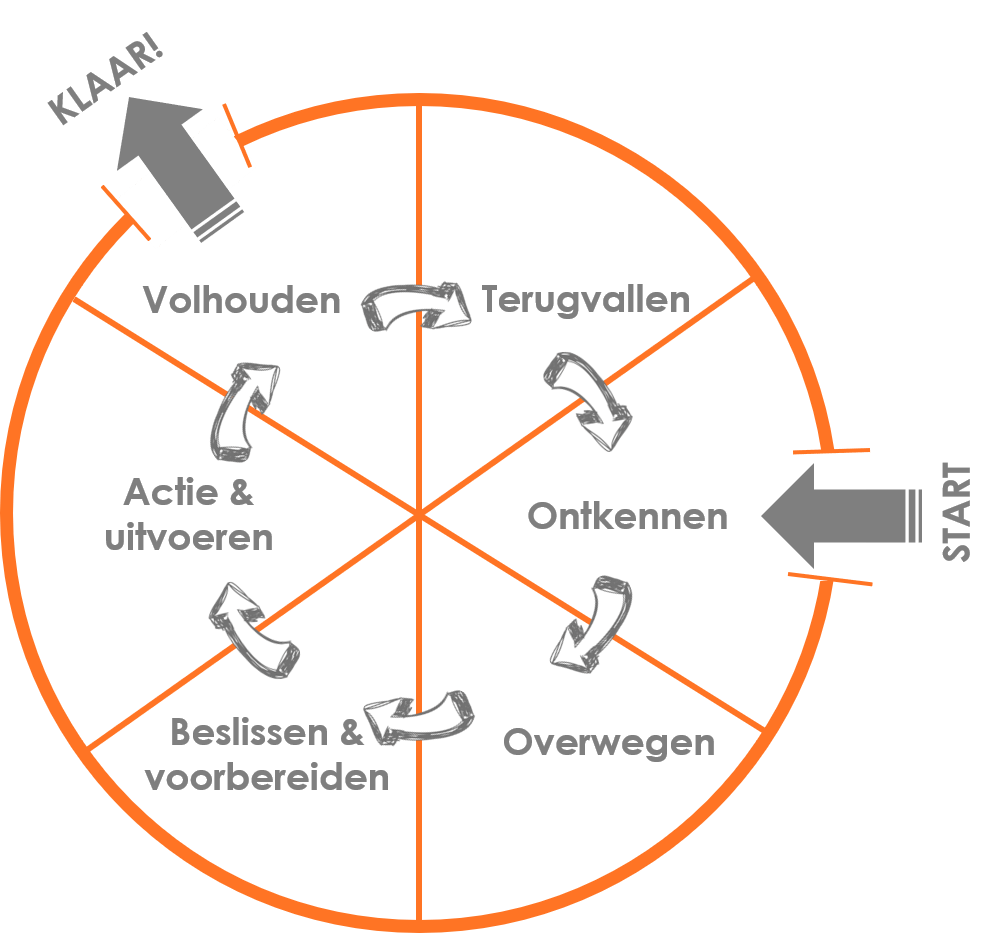
Tip: Identify which stage of behaviour change you're in (denial, awareness, preparation, action, maintenance, or relapse) and adapt your strategy accordingly.
Step by step: start small and build up
Behaviour change requires repetition and consistency. Start with small, achievable steps and build up gradually. Aim for 30 days of uninterrupted repetition to form a new habit. Learn from any setbacks and use those experiences to come back stronger.
Advice: Set small, achievable goals using SMART principles (Specific, Measurable, Acceptable, Realistic, and Time-bound). For example: instead of "I want to eat healthier," say "I eat two pieces of fruit every day."
Preparation is the key to success
Good preparation is essential for successfully building new habits. Make sure you not only set a specific goal, but also take the necessary preparatory steps. This might mean adjusting your environment, seeking support, or getting the right supplies.
Advice: Prepare yourself by setting a specific goal and planning the necessary steps. If you want to eat two pieces of fruit a day, for example, make sure you always have enough fruit at home.
Repeat, repeat, repeat: put in the reps!
Habits are formed through repetition. Just like physical training, the more you do it, the stronger the habit becomes. Aim for daily repetitions of your new habit and keep track of how often you do it.
Advice: Use an app or calendar to track your progress and remind yourself to repeat your new habit every day.
Aim for a 30-day streak
Consistency is crucial when forming a new habit. Try to carry out your new habit every day without interruption. For most people, it takes around 30 days to establish a new habit.
Advice: Choose one habit at a time and aim to keep it up as long as possible — ideally a full month! "Don't break the chain."
Learn from setbacks and come back stronger
A setback isn't starting over — it's simply a new phase in your behaviour change journey. By learning from your previous attempts, you can discover where things went wrong and prepare to come back stronger in your next cycle.
Tip: Don't be too hard on yourself. It's normal to slip up; what matters is that you keep going and learn from your mistakes.
Manage your impulses
Impulsivity often plays a major role in creating and maintaining unhealthy habits. By becoming aware of your impulses and automatic reactions, you can learn to manage them.
Advice: Become aware of the triggers that drive your unhealthy habits and develop strategies to control these impulses. Mindfulness and meditation can help with this.
Shape your environment for success
Your environment plays a crucial role in your ability to build new habits. By arranging your surroundings so that healthy choices are easier and more appealing, you increase your chances of success.
Advice: Make healthy choices accessible and keep temptations out of sight. Don't keep crisps in the house, put healthy snacks at the front of your fridge, or leave your running shoes by the door.
Accountability: your 'response-ability'
Taking responsibility for your actions is an important part of behaviour change. There is always a space between a stimulus and your response to it — and in that space lies your power to choose. By responding consciously rather than automatically, you can make better choices that align with your goals.
Advice: Become aware of your triggers and take responsibility for how you respond to them. Try to use the gap between an impulse and your reaction to make more conscious choices.
Conclusion
Behaviour change is a challenging but achievable process that begins with awareness and accountability. By following this plan, you can step by step build new habits and break unhealthy ones. Remember that small, consistent efforts lead to big changes. Be patient, keep trying, and don't give up — every attempt at change brings you closer to a healthier and happier life.
Read next
Emotional eating
Nutrition plays a crucial role in our physical wellbeing, but it also has a profound influence on our emotions and…
Food diary
Keeping a food diary is a powerful tool for better understanding your eating habits and making healthier choices. It…
Habits
Habits form the core of our daily lives and have an enormous influence on our health and wellbeing. We're often unaware…
Habits and sleep
A good night's sleep is crucial for your health and wellbeing. Unfortunately, certain habits can seriously disrupt your…