Fats
Fat has developed a bad reputation over the years, but in reality it is indispensable for a healthy body. It's not only an important source of energy — it also plays a crucial role in many bodily functions, including the absorption of vitamins, hormone production, and the protection of organs.
Fats are a type of macronutrient that the body uses for energy and as building material for cells. They are found in both animal and plant-based foods and can be divided into two main categories: triglycerides and lipids such as cholesterol. Triglycerides are the fats we primarily use for energy, while lipids like cholesterol help build cells and produce hormones.
Blood fats (triglycerides)
Triglycerides are a form of fat found in the blood. When you consume more calories than you burn, your body converts the excess energy into triglycerides and stores them in fat cells. Later, when you need energy — for example between meals — these triglycerides are released to meet that need. However, excessively high triglyceride levels can contribute to health problems such as heart disease and pancreatitis.
Types of fat
Unsaturated fats: the good fats
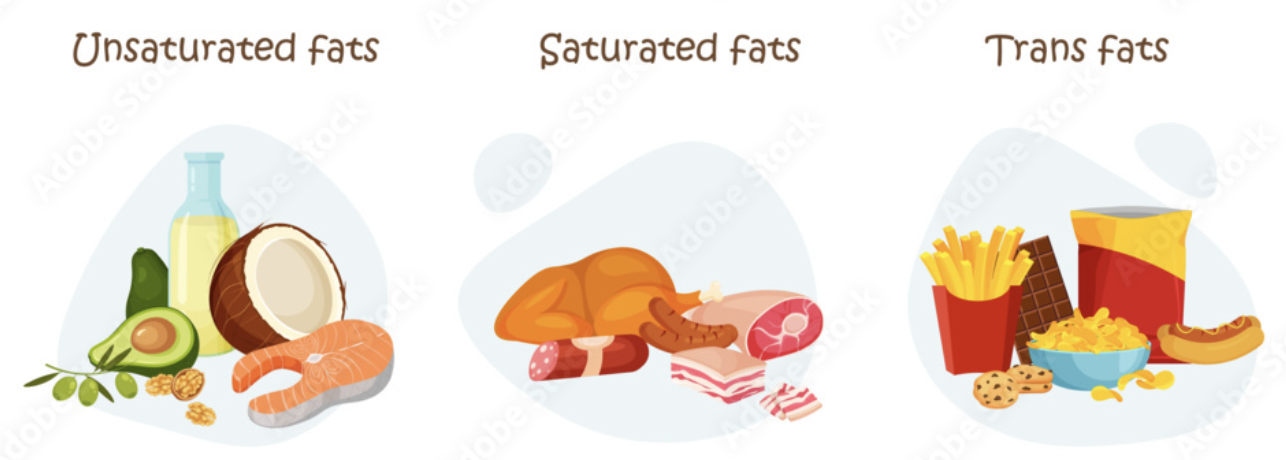
Unsaturated fats are considered the "healthy" fats. They are liquid at room temperature and are found mainly in vegetable oils, nuts, seeds, and oily fish. Unsaturated fats can be further divided into monounsaturated and polyunsaturated fats.
- Monounsaturated fats help lower bad LDL cholesterol and can raise good HDL cholesterol. They are found in olive oil, avocados, and nuts such as almonds and hazelnuts.
- Polyunsaturated fats, including the well-known omega-3 and omega-6 fatty acids, are essential for the body and must be obtained through diet. Omega-3 fatty acids are particularly known for their anti-inflammatory properties and are found in oily fish, flaxseed, and chia seeds.
Saturated fats: the bad fats?
Saturated fats are generally solid at room temperature and are found in animal products such as meat, butter, and cheese, as well as some vegetable oils like coconut and palm oil. For a long time, saturated fats were seen as a major driver of heart disease, but more recent research suggests the picture is more nuanced. While a high intake of saturated fat is still discouraged, the problem appears to lie more in the balance between saturated and unsaturated fats in the diet.
Trans fats: the truly bad fats
Trans fats are artificially processed fats produced by adding hydrogen to vegetable oil to harden it, a process known as hydrogenation. They are commonly used in processed foods because they are inexpensive and extend shelf life. Trans fats are particularly harmful to health: they raise LDL cholesterol and lower HDL cholesterol, contributing to cardiovascular disease, diabetes, and other chronic conditions.
Cholesterol: the misunderstood lipid
Cholesterol is a waxy substance essential for building cell membranes and producing hormones such as oestrogen and testosterone. However, different types of cholesterol have different effects on health:
- LDL cholesterol (Low-Density Lipoprotein) is known as "bad" cholesterol because it contributes to the build-up of plaque in blood vessels, which can lead to atherosclerosis and heart disease.
- HDL cholesterol (High-Density Lipoprotein) is called "good" cholesterol because it helps remove excess cholesterol from blood vessels and transport it back to the liver, where it can be broken down and eliminated.
How lifestyle affects your fat profile
Your lifestyle has a significant influence on your fat profile. Factors such as nutrition, physical activity, stress, and sleep can all affect your triglycerides, cholesterol, and overall health.
- Nutrition: Avoid trans fats and limit saturated fats. Focus on a diet rich in unsaturated fats, such as those found in fish, nuts, and olive oil.
- Exercise: Regular physical activity can help lower triglycerides and raise HDL cholesterol, reducing your risk of cardiovascular disease.
- Weight management: Maintaining a healthy weight reduces the amount of visceral fat in your body, helping to reduce inflammation and the risk of chronic disease.
- Quitting smoking: Smoking lowers HDL cholesterol and increases the risk of cardiovascular disease.
Conclusion
Fats are essential for our health, but it's important to consume the right types in the right amounts. By focusing on healthy fats such as unsaturated fats and omega-3 fatty acids, and avoiding trans fats and excessive saturated fats, you can improve your health and reduce the risk of chronic disease. Fat should be part of a balanced diet, with close attention paid to both quality and quantity to support good health.
Read the methodology
Read next
Unsaturated fats
Unsaturated fats are fats that are typically liquid at room temperature. They are considered "healthy" fats because of…
Choosing quality fats
Fats play a crucial role in our diet and health. Although they often have a bad reputation, not all fats are the same.…
Eating less sugar: why and how
Sugar is everywhere. From soft drinks to bread, from breakfast cereals to sauces — it's one of the most common…
Eating less: how and why
We live in a world where food is available everywhere, all the time — which makes it easy to eat too much. Excessive…